
When couples seek help for infertility, it is usually after months or years of trying, confusion, and emotional stress. At this stage, they want clear, honest answers—about what might be causing the problem and which treatment option is right for them. Understanding how the body works, what can go wrong, and what treatment choices exist is the first step toward informed decision-making.
Two of the most commonly recommended fertility treatments are IUI (Intrauterine Insemination) and IVF (In-Vitro Fertilisation). Knowing the difference between these two options is essential before beginning treatment.
What Happens in IUI (Intrauterine Insemination)
IUI is considered a simple, low-intervention fertility treatment. In this procedure, healthy, washed sperm is placed directly into the uterus around the time of ovulation. This shortens the distance sperm must travel to reach the egg and improves the chance of fertilisation.
IUI is usually recommended when:
- Sperm count or movement is slightly reduced
- The woman has mild ovulation problems
- Fallopian tubes are open
- There is mild endometriosis
- All tests appear normal but pregnancy is not occurring
An IUI cycle involves ovulation monitoring, a few ultrasounds, and a single timed procedure. There is no surgery or hospital stay, and recovery is immediate.
IUI Success Rates
Across India, IUI success rates average 10–20% per cycle, depending on age and health.
- Women under 35 may see success rates up to 20–25%
- Women over 40 often have success rates below 5%
Because success per cycle is modest, doctors usually recommend 3–4 IUI cycles before considering more advanced treatment.
What Happens in IVF (In-Vitro Fertilisation)
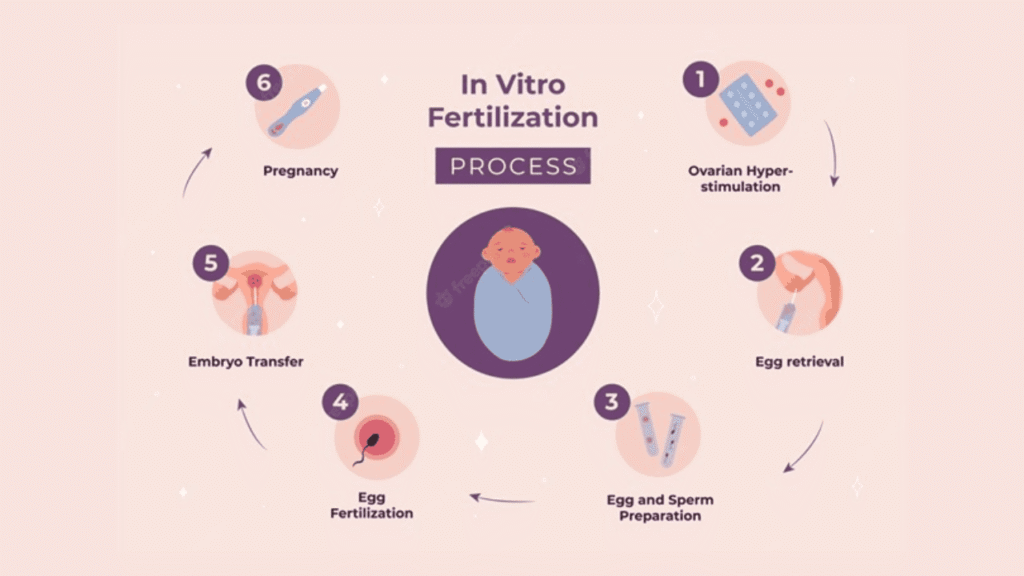
IVF is a more advanced fertility treatment. In this process:
- Eggs are collected from the ovaries
- Fertilisation occurs in a laboratory
- The healthiest embryo is transferred into the uterus
IVF is commonly advised when:
- Both fallopian tubes are blocked or damaged
- There is severe male-factor infertility
- Endometriosis significantly affects fertility
- Multiple IUI cycles have failed
IVF Success Rates
IVF success rates are significantly higher than IUI:
- 40–60% per cycle for women under 35
- Around 30% for women in their late 30s
- Success rates decline further after 40
These figures are based on large Indian fertility datasets and vary depending on individual factors.
IVF also allows the use of advanced techniques such as:
- ICSI (injecting a single sperm directly into the egg)
- Blastocyst transfer
- Egg freezing for fertility preservation
How Doctors Decide Between IUI and IVF
The choice between IUI and IVF is never random. It begins with proper diagnosis, which may include:
- Ultrasound scans to track ovulation
- Hormone tests to assess egg reserve
- HSG test to check if fallopian tubes are open
- Semen analysis to evaluate sperm health
If results are normal or only mildly affected, treatment may start with IUI. If tubes are blocked, egg reserve is low, or age is above 35, IVF is often recommended earlier.
Male Infertility: When IUI or IVF Is Better
Male-factor infertility contributes to 40–50% of infertility cases, making semen analysis just as important as female testing.
- Mild sperm issues: IUI may be effective because sperm washing selects the healthiest sperm
- Severe sperm problems or repeated IUI failure: IVF with ICSI is usually recommended
Lifestyle changes—such as quitting smoking, reducing alcohol, improving diet, sleep, and maintaining a healthy weight—can significantly improve sperm quality over time.
Lifestyle, Budget, and Timeline Considerations
Fertility treatment is not only medical—it also involves lifestyle and planning.
- Lifestyle: Fertility-friendly diet, stress management, weight control, and proper rest improve egg and sperm quality
- Cost: IUI is less expensive per cycle; IVF costs more but may reduce time to pregnancy in complex cases
- Time: Multiple IUI cycles may take months, while IVF may offer faster results for certain conditions
Doctors discuss expected number of cycles, cumulative costs, and realistic timelines to help couples decide wisely.
When Couples Skip IUI and Choose IVF Directly
In some situations, skipping IUI saves time and emotional strain.
For example, a woman in her late 30s with blocked tubes has very little chance with IUI. IVF offers a much higher chance of pregnancy in the first attempt. In such cases, going straight to IVF can be the more practical option.
However, for younger couples with good fertility potential, IUI can still be a reasonable first step. Treatment plans are always personalised—there is no one-size-fits-all rule.
Some Real Numbers to Keep in Mind
- IUI: ~10–20% success per cycle (India average)
- IVF (under 35): ~50–60% success per cycle in some centres
- IVF (over 40): Often below 20%
These are averages. Your individual chances depend on age, egg reserve, sperm quality, uterine health, and the cause of infertility.
Final Words: Your Next Step
If you have been trying to conceive and feel stuck, guessing will only add stress. The right next step is a clear diagnosis and an honest discussion about whether IUI or IVF suits your situation best. With accurate testing, lifestyle support, and a personalised plan, couples can move forward with confidence instead of uncertainty.
FAQs: IVF vs IUI
1. What are the success rates of IVF and IUI?
- IUI: Around 10–20% per cycle (higher in younger women)
- IVF: Around 50–60% per cycle for women under 35
Success depends on age, health, and infertility cause.
2. Can IVF work if both fallopian tubes are blocked?
Yes. IVF is the preferred option because fertilisation happens outside the body.
3. How do I know whether to start with IUI or IVF?
Fertility tests such as ultrasound, hormone tests, HSG, and semen analysis guide the decision. Mild issues may start with IUI; blocked tubes, low egg reserve, severe sperm issues, or age above 35 usually point toward IVF.